Hyperopia (Long-Sightedness)2026-02-04T23:55:34+13:00

Manage hyperopia with personalised eye care in Melbourne

Discover how tailored vision correction options can help bring near and distance focus into clearer balance

Manage hyperopia with personalised eye care in Melbourne

Discover how tailored vision correction options can help bring near and distance focus into clearer balance

With hyperopia treatment, many people find near vision easier

Learn what hyperopia is, why it develops, and which treatment options may help improve everyday visual comfort
  • Hyperopia, also known as long-sightedness, is a common vision condition that affects people of all ages.
  • Many children are born with mild hyperopia, which may reduce as the eyes grow. In adults, hyperopia can become more noticeable with age, especially when combined with natural changes in near vision.
  • Some people with mild hyperopia may not notice symptoms early on, as the eyes can compensate.
  • Others may experience blurred near vision, eye strain, or headaches.
  • Regular eye examinations help detect hyperopia and monitor how it changes over time.
  • Hyperopia occurs when the eye is shorter than average or the cornea has too little curvature. This causes light to focus behind the retina instead of directly on it.
  • Genetics often play a role, meaning hyperopia can run in families.
  • As people age, the eye’s natural focusing ability decreases, which can make symptoms more noticeable. This can lead to difficulty with near tasks such as reading or screen use. In some cases, distance vision may also be affected.
  • The degree of hyperopia varies from person to person.
  • Hyperopia is diagnosed through a comprehensive eye examination.
  • Vision tests measure how clearly you see at different distances.
  • Specialised equipment is used to assess how light focuses inside the eye and to measure eye shape.
  • Eye drops may be used to relax the focusing muscles, allowing more accurate results.
  • These tests help determine the degree of hyperopia and whether it is contributing to symptoms such as eye strain or blurred vision.
  • Regular eye checks are important to monitor vision changes and support long-term eye health.
  • Hyperopia can be managed in several ways, depending on age, eye health, and lifestyle.
  • Glasses or contact lenses are commonly used to improve near and distance vision.
  • For suitable adults, laser eye procedures such as Customised LASIK or PRK may be considered to reshape the cornea and improve focus.
  • In some cases, lens-based procedures may also be discussed.
  • The most appropriate option depends on individual eye measurements and visual needs.
  • A detailed assessment is required to determine suitability and explain potential benefits and limitations.

Is hyperopia the same as long-sightedness?
Yes. Hyperopia is the medical term for long-sightedness.

Can hyperopia get worse over time?
Symptoms may become more noticeable with age, especially for near vision.

Do glasses cure hyperopia?
Glasses correct vision while worn but do not change eye structure.

Is laser eye surgery an option for hyperopia?
Laser eye surgery may be suitable for some adults after assessment.

How often should hyperopia be checked?
Regular eye exams are recommended, especially if symptoms change.

Clearer vision in 3 simple steps

From your first assessment to life after treatment, we’ve made the journey as straightforward as can be

Step 1: GET IN TOUCH

Not everyone is suitable for laser vision correction. The first step is to find out if treatment could help you. Call our friendly team or use our online calendar to book a free appointment.
Step 2: WE’LL MEET

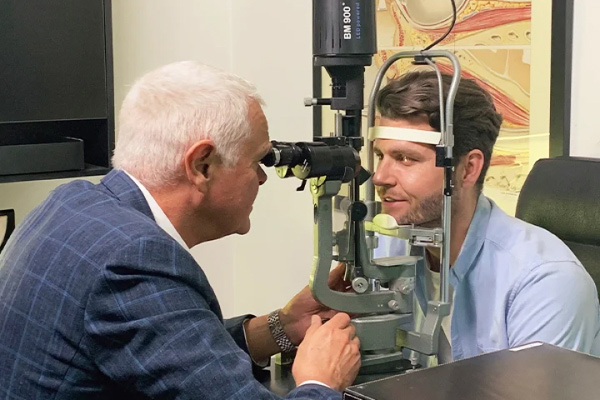
At your appointment, we’ll examine your eyes, answer your questions, and give you an honest recommendation based on your needs. You’ll leave with a clear understanding of the best options for you.

Step 3: ENJOY THE BENEFITS

After treatment, many people are surprised at how quickly daily life becomes easier. From driving to travelling to enjoying sport, you could experience freedom without glasses or contacts.

Freedom from glasses can start with one appointment

Find out if laser eye surgery is right for you

Book your free laser eye assessment and learn if clearer vision is within your reach

Get your questions answered about laser eye surgery in Melbourne

Explore expert insights and quick guides to help you understand treatment options, benefits, and what to expect right here in Melbourne

Coronavirus (COVID-19) update from Vista Eyes Laser Eye Clinic

Categories: News|

At VISTAeyes we take the recent Coronavirus (COVID-19) outbreak very seriously and are taking additional protective measures to ensure the health and safety of our patients, team members and the wider community.  We are monitoring the situation closely and will continue to act under the guidelines from the Australian health authorities and RANZCO.

Ready for life without glasses?

Ready for life without glasses?

Take our 2-minute quiz to see if laser eye surgery could suit you

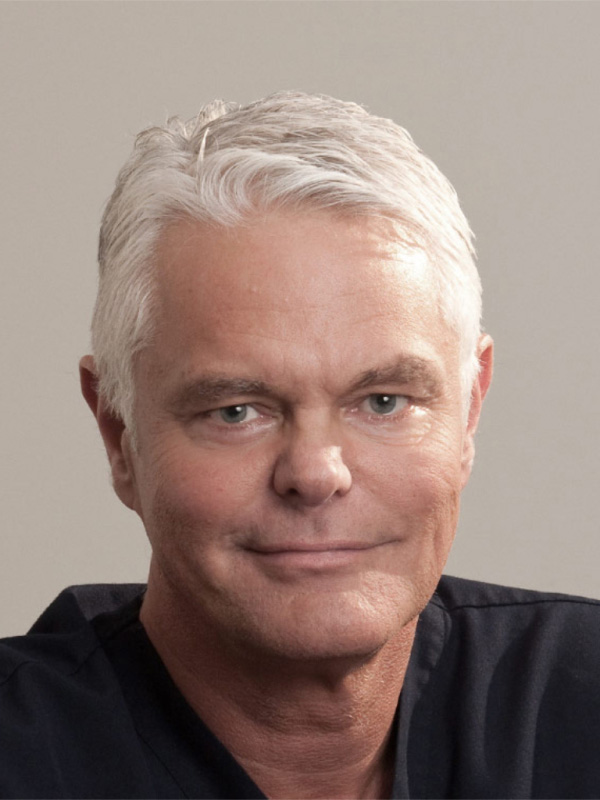
Hi, I’m Dr Rick Wolfe.

I’ve been performing laser vision correction and cataract surgery in Melbourne since 1991, with more than 30,000 procedures completed.

As a Fellow of RANZCO, I’ve dedicated my career to advancing eye surgery techniques in Australia and internationally.

I regularly share my knowledge at global conferences and founded the World College of Refractive Surgery and Visual Sciences to support excellence in our field.

My goal is simple: to provide safe, precise, and personalised care that helps people enjoy clearer vision.

Every patient is unique, and I take pride in tailoring treatment to individual needs.

Dr Rick Wolfe

Owner, Founder and Surgeon at Vista Eyes Laser Eye Clinic
Ophthalmologist and Laser Eye Surgeon, MB BS, FRANZCO, FWCRS
Go to Top